
Most SaaS companies don’t lose customers because the product is bad. They lose them because the customer journey is a bit fragmented, you know.
A user clicks an ad, signs up for a trial, gets three onboarding emails, ignores two product prompts, hits one confusing setup screen, then quietly disappears. No angry tweet. No cancellation email. Just churn and then silence.
That’s the uncomfortable reality of SaaS growth in 2026: acquisition costs are getting more expensive, switching costs are lower, and AI generated competitors are multiplying faster than most teams can really differentiate. The companies winning right now aren’t only building better products, they are orchestrating a more coherent customer journey.
The original source from Ranq.io covers the core stages pretty well. Still, there’s a bigger strategic shift underneath it all: the SaaS customer journey Stages. is no longer linear.
Users don’t glide neatly from awareness to consideration to purchase to loyalty anymore. They bounce across channels, they validate your credibility inside communities, they test your UX against competitors in a snap, and they want real value before they even commit.
So yeah, this changes the way we should frame every stage, at least if you want it to actually work.
Key Insight
- SaaS growth now leans more on journey optimization than on traffic creation.
- The biggest revenue leaks often show up in onboarding and early activation, not acquisition.
- Smaller SaaS teams can beat larger players by delivering faster time-to-value, and by building retention loops that keep improving.
What are the main SaaS customer journey stages?
The SaaS customer journey usually covers awareness, consideration, acquisition, onboarding, retention, and advocacy. Each part comes with a different level of customer intent, different friction points, and different success metrics.
Most companies oversimplify the journey into a funnel. That’s handy for dashboards, but it can be operationally misleading.
A real SaaS customer journey is more like a loop, because users rarely move in a straight line, they circle back when something feels off.
- A user stumbles on your brand
- They weigh alternatives
- They trial your product
- They judge whether it fits inside their day to day workflow
- They either deepen usage or quietly disappear
- Power users turn into distribution allies, bringing in more people
What matters is not only pushing people forward, it’s lowering cognitive friction at every point, so decisions feel lighter.
Here’s a practical way to look at it, without pretending it’s one direction:
| Stage | Customer Mindset | Primary Goal | Key Metric |
|---|---|---|---|
| Awareness | “I have a problem” | Educate and attract | Traffic quality |
| Consideration | “Which solution really fits?” | Build trust | Demo/trial signups |
| Acquisition | “Can I commit?” | Convert efficiently | CAC to conversion |
| Onboarding | “How do I succeed here?” | Deliver quick wins | Activation rate |
| Retention | “Is this worth keeping?” | Increase dependence | Net revenue retention |
| Advocacy | “Should I recommend this?” | Create promoters | Referrals reviews |
The key insight is that each step needs a totally different marketing psychology. Like seriously, the mental trigger changes depending on where the buyer is, not just the channel.
A LinkedIn ad built for awareness should not sound like an onboarding email. Yet a lot of SaaS brands use the same words everywhere, same angle same vibe, just with different screenshots.
Why Is the SaaS customer journey Different From Traditional Sales funnels?
SaaS Customer Journey Stages never really end because revenue relies on retention, expansion, and recurring usage, not a one-time transaction.
Traditional businesses usually optimize for closing the deal. SaaS teams optimize for durable adoption.
And that swap changes everything.
A customer buying furniture might touch the brand for two weeks. A SaaS customer might engage with your product every day for five years, in a way that repeats and deepens.
So the product experience starts acting like marketing, not only supporting it.
This is where a lot of growth teams get stuck internally. Marketing pushes signups, but onboarding is really a product responsibility. Retention tends to sit with customer success. Upsells are usually sales territory.
Customers don’t care about your org chart, and honestly they never do.
They move through a single continuous journey, in their head at least.
The Hidden Problem most SaaS teams ignore, until it hurts
Plenty of SaaS orgs stare at conversion rates like it will solve everything, while activation lag quietly drags the outcome down.
Activation lag = the elapsed time between signup and the first truly meaningful value.
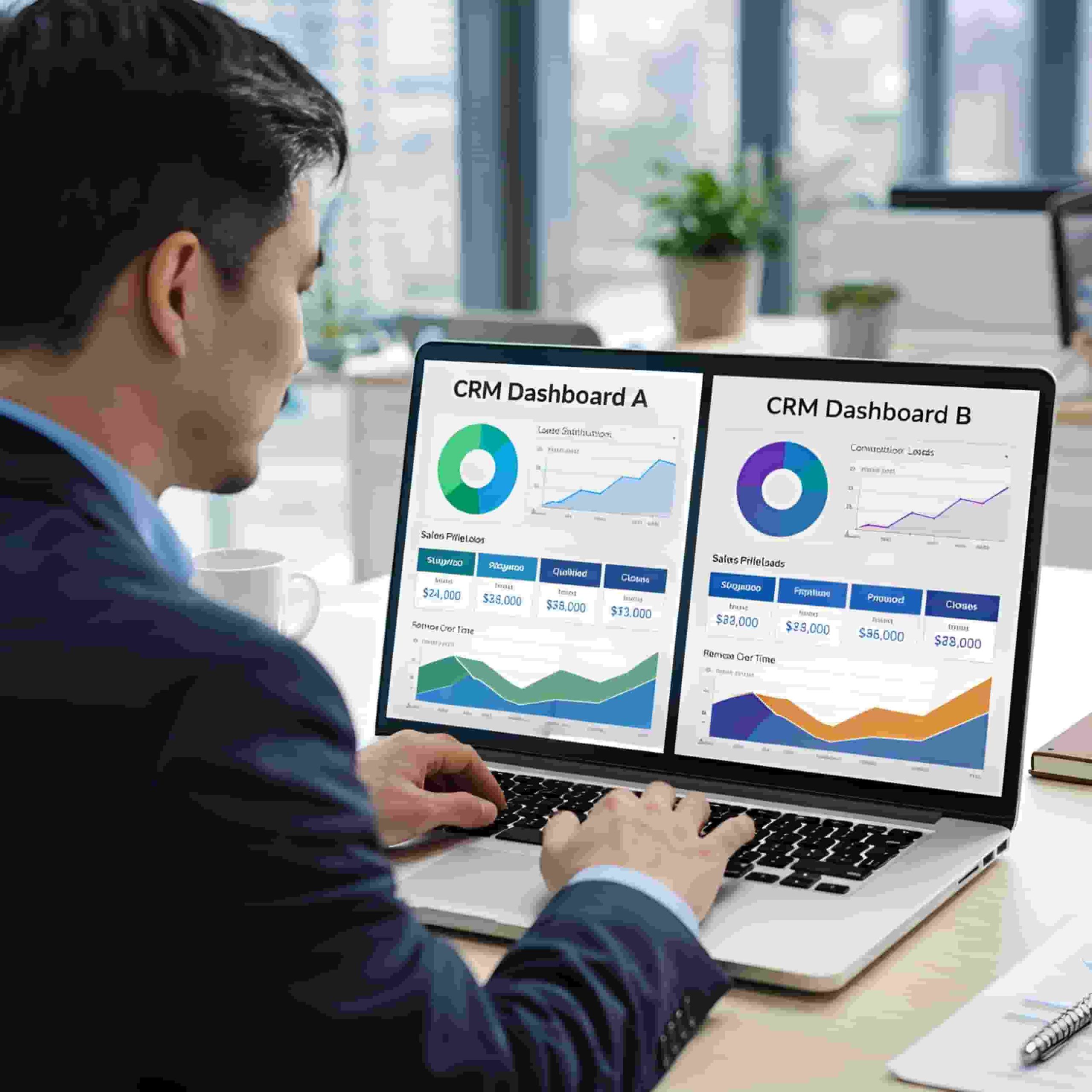
So if your CRM pipeline tool takes 14 days before users feel a “wow moment”, churn risk jumps fast, dramatically even.
Slack famously picked one specific activation milestone: teams that traded 2,000 messages were much more likely to stay for the long run. That finding pushed their onboarding approach, and it stayed that way.
So the point isn’t “copy Slack.”
The point is this, basically:
The strongest SaaS companies design customer habits, not only optimize conversions.
How Do You Improve the Awareness and Consideration Stages?
You improve awareness, and consideration, by cutting down uncertainty before people even type the first thing about your product.
Most SaaS content misses the point because it talks features only, instead of lowering decision anxiety, you know the feeling.
People are not actually asking:
- “Does this platform have AI?”
- “Does this tool use automation?”
They are really asking something more grounded:
- “Will this save my team time?”
- “Will implementation become a nightmare?”
- “Will my employees actually use it?”
- “Will switching platforms break daily operations?”
So the strongest awareness-stage content addresses real-world operational fears, not idle feature curiosity.
What Works in 2026
1. Problem-first SEO
Generic “best CRM software” pages are oversold and overfilled.
The smarter approach is intent-layered SEO, not just keyword stuffing:
- “How to reduce manufacturing inventory delays”
- “Why sales teams stop using CRMs after 90 days”
- “ERP onboarding mistakes for small manufacturers”
This pulls users in earlier, before they commit.
2. Community validation
Reddit, LinkedIn comments, YouTube reviews, and Slack communities now tug on SaaS buying decisions in a big way.
People tend to trust peer workflows more than super polished landing pages, even when the page looks perfect.
3. Interactive experiences
ROI calculators, sandbox demos, self guided product tours, and AI assessments beat those static feature pages.
In general, folks want to feel the product in motion, more than just reading about it.
Awareness vs Consideration Content
| Content Type | Awareness Stage | Consideration Stage |
|---|---|---|
| Blog posts | Problem education | Comparison content |
| Videos | Pain point storytelling | Product walkthroughs |
| Webinars | Industry trends | Use case demonstrations |
| SEO pages | Informational keywords | Commercial intent keywords |
| Case studies | Rarely used | High impact |
The biggest mistake is treating every piece of content like it exists only for lead generation, instead of thinking of it as trust acceleration.
What Happens During SaaS Onboarding and Activation?
Onboarding works best when users reach real, meaningful value fast, and with minimal effort or friction.
Most churn starts during onboarding, even if people cancel a few months later.
It’s the phase where expectations meet reality, and then you can feel the mismatch pretty fast.
A clean, polished website can spark enthusiasm. But if getting started feels tedious, users internally lower their confidence in the product right away.
The 5-Step SaaS onboarding Framework
1. Remove setup drag
Every extra form, extra integration step, or extra configuration screen can drag completion rates down.
Notion and Canva grew in part because people could actually taste value immediately.
2. Customize the first run
Different users carry different intents.
A manufacturing ERP buyer should not be guided through the exact same journey as a marketing agency team.
Behavior-based onboarding now matters more than static tutorials.
3. Produce a swift “aha moment”
People need a clear, noticeable success cue as fast as possible.
Examples:
- First automated workflow
- First dashboard insight
- First successful email campaign
- First driver tracking alert
- First AI-generated report
4. Trigger contextual education
Long tutorial videos are usually ignored, people just skip them.
Tooltips, embedded walkthroughs, and milestone prompts work better because they show up when the moment is right.
5. Measure activation scientifically
Track things like:
- Time-to-value
- Feature adoption
- Session depth
- Team invites
- Repeat logins
If you do not have activation metrics, onboarding becomes more guessing than science.
Example: HubSpot’s Product-Led Growth Shift
HubSpot expanded aggressively by shifting onboarding away from sales teams.
Rather than pushing demos early, they let users explore the instruments on their own first, then they added education progressively.
This reduced friction for SMBs that did not want enterprise-style onboarding calls.
Small SaaS companies can take this lesson directly:
During onboarding, simplicity often outperforms fancy complexity.
How Do SaaS Companies Improve Retention and Reduce Churn?
Retention gets better when your product is baked into the customer’s day to day workflow, not just “used” now and then.
Features don’t automatically drive staying power. Dependence does.
And that strategic nudge is the thing most SaaS teams miss, even when they talk about retention.
A customer remains because leaving feels disruptive, not because your UI looks shiny and modern.
Common retention drivers
| Retention Lever | Why It Works | Example |
|---|---|---|
| Workflow integration | Product becomes operationally necessary | ERP connected to inventory |
| Team collaboration | Multiple users generate stickiness | Slack channels |
| Historical data accumulation | Leaving means discarding hard earned context | CRM pipelines |
| Automation dependency | Processes lean on the platform | Zapier automations |
| Custom reporting | Teams depend on insights | BI dashboards |
The most effective retention mechanism is operational dependence, not emotional loyalty.
The counter-argument most founders overlook
Some founders think aggressive feature expansion improves retention.
But often it backfires.
More features can:
- Make onboarding feel heavier, increase onboarding complexity
- Confuse positioning
- Reduce usability
- Slow product performance
For small SaaS companies, depth usually beats breadth, in my experience.
A focused tool solving one painful workflow really well can outperform those bloated platform setups.
Churn signals you should monitor early
Keep an eye on:
- Reduced weekly usage
- Declining team activity
- Support ticket spikes
- Failed integrations
- Inactive admin accounts
By the time the cancellation requests arrive, the retention battle already feels done.
How do SaaS companies turn customers into advocates
Advocacy happens when customers reach measurable outcomes, that are actually worth sharing in public.
Happy customers don’t automatically become promoters, you still need something more.
People advocate when recommending your product increases their credibility, not only when they like the UI.
That’s why strong SaaS advocacy programs focus on customer wins instead of referral mechanics.
Practical ways to build advocacy
Create visible customer success stories
If your ERP helped reduce operational costs by 20 percent, then package that win, cleanly and in plain language, not as a vague claim. Make it easy for people to see what changed, how fast it changed, and what it meant.
Specificity matters more than generic testimonials.
[Skip the fluff, show the numbers]
Build community recognition, and do it in a way that feels real
Feature customers publicly, but keep it consistent, like you’re spotlighting a living case study rather than a one time mention.
- LinkedIn spotlights
- User webinars
- Customer awards
- Podcast appearances
Recognition tends to create emotional investment, because people feel seen, and others feel safe copying what worked.
Reward product expertise (yes, give it a platform)
Use advanced certifications, partner badges, and expert communities so users can deepen their platform commitment. When expertise gets rewarded, the community has a reason to keep growing rather than staying quiet.
Why advocacy is becoming more important now
AI generated content is flooding search engines. It’s everywhere, and buyers notice. So buyers increasingly trust:
- Peer recommendations
- User generated tutorials
- LinkedIn discussions
- Independent reviews
So advocacy is no longer just retention marketing, and it’s not only about keeping customers happy. It has become a core acquisition channel.
The future of SaaS growth belongs to companies whose customers turn into their distribution network.
Conclusion: SaaS Companies Need to Make
The SaaS customer journey is no longer just a marketing framework, it’s running like an operational system.
That distinction really matters, and you can feel it in daily work.
The top SaaS performers line things up around one central goal:
Reducing friction between what the customer intended and the moment they actually get value.
They tend to align (not always formally, but in practice) Marketing, Product, Customer success, Sales, and Support.
This is where small businesses can catch a real advantage.
Smaller SaaS companies often move faster, they can tune experiences more precisely, and they adjust the onboarding path rapidly.
- Meanwhile, larger SaaS orgs commonly run into:
- Slow decision making, complicated onboarding, an overbuilt feature set, and department silos.
- And in today’s SaaS landscape, growth almost never comes from traffic alone.
- It comes from crafting a journey people actually want to keep going through, again and again.