
- A well timed onboarding email chain can bump user activation by 60–80%
- Early “first value” nudges beat long tutorial style emails, most of the time
- Personalization plus behavior based triggers work better than plain generic welcome messages
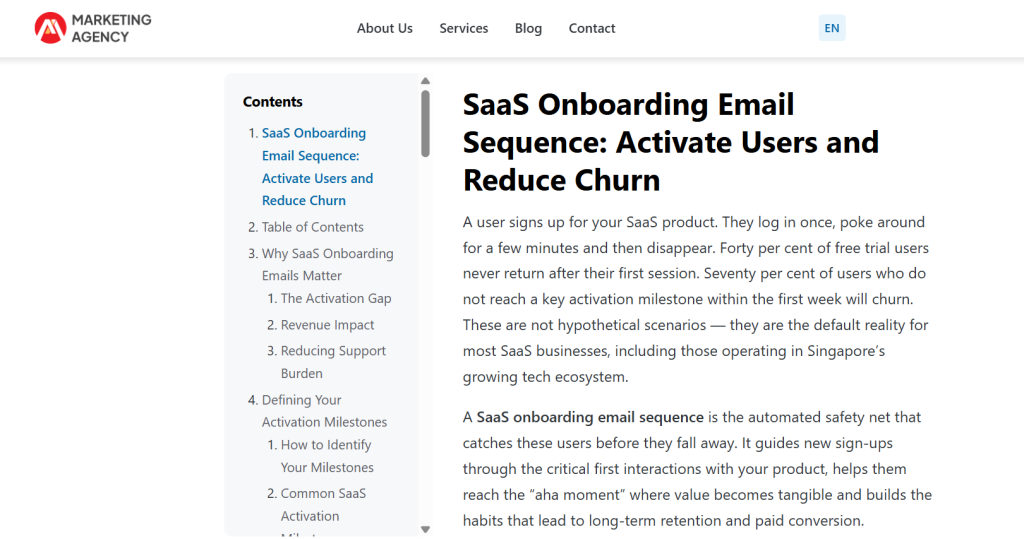
You’ve shipped a SaaS, you spent months polishing features and you opened the doors for your first users. Yet 70% of them abandon everything within the first week, which is painful. Here’s the truth though: your product isn’t really failing, your onboarding is. saas onboarding email sequence-user activation is necessary to hold the user data And a thoughtfully built email sequence can change that, from curious signups into active users… and later paying customers
What makes a SaaS onboarding sequence actually work
Direct answer: Deliver the first win quickly, help people navigate step by step and reduce any friction you can, even the small stuff
Data from high-performing SaaS, it seems, shows the top sequences get the first win in less than 24 hours, while the average ones take about 3–5 days. That faster “quick win” angle reduces cognitive load and, in practice, it helps people feel confident about using your platform. Take a freemium project management tool as the example here: the first email shows up immediately, and it encourages users to create a project within 2 minutes. When you stick to one clear action per message, you tend to avoid overwhelming new users, but you still get steady reinforcement of progress.
Small Business Angle: Even startups with tiny teams can replicate it by mapping out 3–5 essential moves that define “success” for new users. You do not need automation-heavy systems at the beginning. Simple Gmail or Mailchimp workflows can do the job just fine.
Summary: Fast, actionable steps plus one clear call-to-action email, improves activation rates a lot.
How many emails should your onboarding sequence actually have?
Between 4–5 emails in the first week seems best for most teams, and it should be mostly about action not instruction, so it feels natural.
Some research suggests average sequences only get about 2–3 emails in that first week, but the high performers push closer to 4–5.
The logic is pretty direct: engagement spikes right after signup, and if you delay, people tend to fade out. So frontloading value emails, like the first message should do something practical, helps users interact before they lose interest.
Here’s a simplified view that is not too complicated:
| Sequence Type | Email Count (Week 1) | Timing | Focus |
|---|---|---|---|
| Average | 2–3 | Spread | Feature overview |
| High Performer | 4–5 | Immediate + Days 1,2,4 | First value then activation |
Takeaway, send more early on, but keep each message to one clear goal, because that typically converts better than fewer generic sends.
What should each onboarding email do?
Direct Answer: Each email should nudge users toward a measurable win, or a real “aha” moment that they can feel right away.
For example, a B2B CRM could nudge people to import contacts on Day 1, fire off a first sequence on Day 2, and check reports by Day 5. Every email should be contextual, timely, and behavior-triggered if possible. The celebratory or milestone letters, like when you acknowledge the first completed project, help lock in the right behavior and gently point them to the next activity.
Case Study: a design collaboration SaaS noticed a 45% lift in freemium-to-paid conversion after they rolled out milestone emails that celebrated the first design shared with a team. Users did not just understand the product, they actually lived its value.
Summary: steer users toward tangible outcomes, each email is another rung on the ladder to engagement and revenue
Should Small Businesses invest in behavior-based personalization?
Direct Answer: Yes, even modest personalization improves engagement substantially.
Personalization doesn’t have to be some huge, complex AI thing. When you use the person’s name, their role, or what they did earlier, in emails, you’ll often see higher open rates. If you run more advanced sequences, you can send an email only if the user hasn’t finished a critical action yet, like inviting a team member or activating a feature. When behavioral triggers are used, everything feels more relevant and your users, honestly, feel heard.
Personalization Type Complexity Effect on Open Rate Best For
| Personalization Type | Complexity | Effect on Open Rate | Best For |
|---|---|---|---|
| Name only | Low | +5–10% | Everyone |
| Role-based | Medium | +10–20% | B2B SaaS |
| Behavior-triggered | High | +30–50% | Enterprise & PLG |
Takeaway: even tiny personalization tweaks can move engagement up a lot
How Quickly Should Users Reach First Value?
Direct Answer: Within 24 hours. Ideally within the first email.
The earlier the users see real value , the less chance they’ll churn. Like , a developer centric SaaS sent an API key plus copy paste code right in the first email. Then a user could actually make a working API call immediately, which boosts trust while also proving the product is useful.
Small Business viewpoint: Don’t wait for “perfect onboarding”. Find the one thing that signals success, and put it right in your first touch point. The main aim is to build momentum fast , advanced training can come after.
Summary: Getting a win in the first moment makes churn drop, and engagement metrics go up.
Step-by-Step: Building Your First SaaS onboarding Sequence
- Define the activation metric – for example first project, first shared file, or first integration.
- Map the key steps – split the user journey into 3 to 5 essential actions.
- Write emails that do one thing, and keep them short. Try to avoid stacking multiple CTAs in one message.
- Time the emails strategically– send a quick welcome right away, then follow up with daily nudges for the first 4-5 days, so they don’t lose momentum.
- Add milestone or celebratory messages – these reinforce what they already did and increase confidence, even if it’s just a small win.
- Iterate off analytics – watch open rates, click-throughs, and activation stats, then adjust the next emails based on what actually worked.
Summary: Stay sequential, focused, and outcome-driven. This is what makes early engagement stronger and helps set up conversion later on.
Conclusion
A good SaaS onboarding email sequence is basically a quiet revenue engine. For small businesses the idea is pretty straightforward: help people feel value quickly, lead them through clear steps, and personalize interactions whenever it makes sense. Triggers based on behavior, plus milestone emails aren’t just “nice”, they are the line between a product that gets used and one that gets abandoned.
When you model those high-performing sequences, adjust for your audience a bit, and then check the results, even small teams can reach activation numbers that look a lot like enterprise SaaS. Your next signup may actually become your next long term customer, if you lead them to that first real win.