
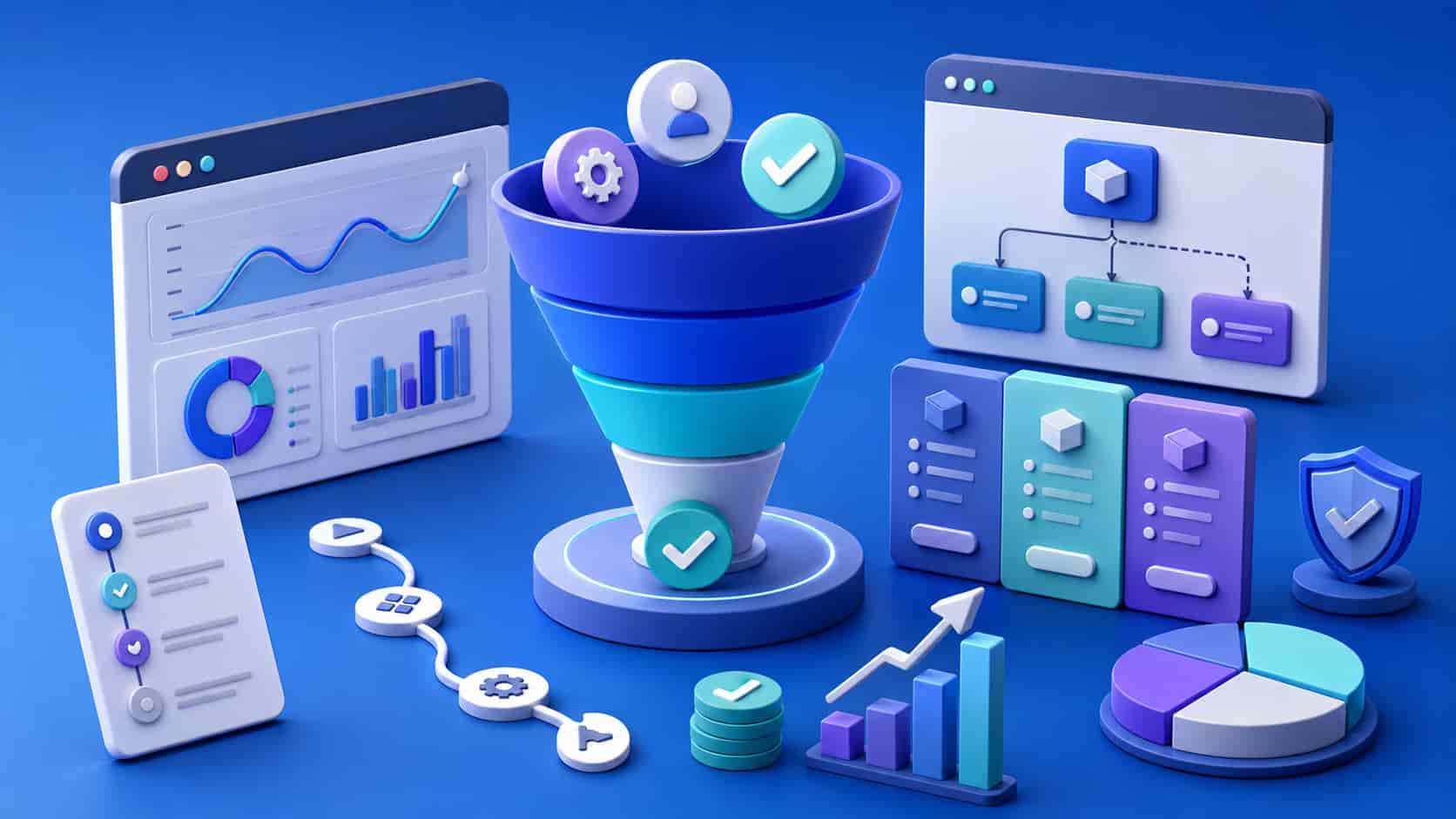
Most SaaS companies don’t really have a traffic problem. They have a conversion problem. Customer acquisition costs keep climbing, while free-trial to paid conversion rates stay frustratingly low across many SaaS categories. That leads to a risky loop, where companies put more budget toward ads, SEO, and outbound outreach, while leaving the friction that blocks high intent users from converting mostly untouched. The truth is simple improving activation or paid conversion rates often gives more revenue than doubling website traffic.
So the way SaaS Conversion Optimization Guide should be handled changes. It’s not about tweaking button colors or running random A/B tests. Real optimization happens when teams see exactly where user intent breaks, between “this seems useful” and “I feel confident enough to pay for it.” The strongest SaaS companies reduce uncertainty, make the value obvious quickly, and help people reach real outcomes faster.
Introduction
- Most SaaS conversion leaks happen through unclear messaging, onboarding friction , and weak trust signals, at least that’s what we usually see.
- High performing SaaS companies optimize for activation and retention, not just vanity metrics.
- Small SaaS businesses tend to grow faster when they stick to niche positioning and cut down the time-to-value
What Is SaaS Conversion Optimization ?
SaaS conversion optimization is the process of increasing the percentage of users who turn into engaged customers, without raising traffic spend. The mistake many companies make is focusing only on top of funnel signals like clicks, signups or free trials. These numbers can look impressive in reports, but they often miss the point and don’t lead to long term revenue growth.
A signup is kinda nothing if people abandon the product right after two weeks. A free trial has little value if users never really touch the core benefit of the platform. Effective SaaS conversion optimization is more about helping users reach real value quickly. That means making messaging clearer, reducing onboarding friction, building trust more strongly, and matching up the customer journey from that first click through to paid conversion.
Lots of companies believe conversion optimization begins on the landing page, but it actually starts earlier. Users show up with expectations shaped by ads, search results, LinkedIn posts, or even referrals. If the landing page feels disconnected from those expectations , trust drops instantly. That mismatch quietly , and maybe without anyone noticing, breaks conversions.
| Optimization Focus | Primary Goal | Short-Term Result | Long-Term Impact |
|---|---|---|---|
| Traffic Optimization | More visitors | Higher sessions | Weak revenue growth |
| Lead Optimization | More signups | Increased trials | Mixed retention |
| Activation Optimization | Faster time to value | More meaningful interaction | Stronger stickiness |
| Revenue Optimization | Higher paid conversion | Improved MRR trajectory | Sustainable ramp up |
| Lifecycle Optimization | Expansion and staying power | Lower churn | More lifetime value |
Key Insight: SaaS growth tends to accelerate most quickly when teams focus on activation and retention instead of vanity metrics
Why Do Most SaaS Funnels Fail
• Messaging Mismatch Between Ads and Landing Pages
One of the biggest conversion killers is inconsistent messaging, users click the ads expecting one outcome but land on pages using more generic, unrelated phrasing. That makes things feel confusing right away. It lowers trust even before they look at the product.
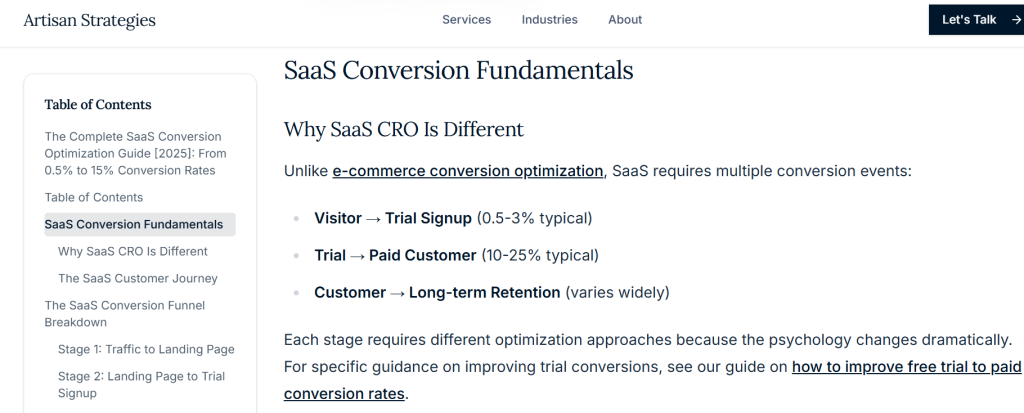
If an ad promises “automated reporting for agencies”, the landing page should echo the same goal, clearly. Keeping language consistent across acquisition channels plus landing pages helps people feel they chose correctly and that they are in the right place.
• Delayed value realization
A lot of SaaS products require people to get through these long setup flows before they can actually feel real value. And that leads to frustration, plus higher abandonment, because users want quick evidence that the tool works for them. The “show me something now” pressure is real.
Slack and Calendly, for instance, won attention partly because you can grasp their main benefit in minutes. That faster path to value tends to lift activation and, naturally, improves conversion outcomes.
• Weak Trust Signals
Smaller SaaS brands often underestimate how crucial credibility is when someone is deciding to buy. People want reassurance before they commit to software they might lean on every day. When trust signals are missing, hesitation goes up a lot, almost immediately.
Customer testimonials, quantified case studies, founder visibility, security assurances, and well known client logos all help reduce perceived risk. When those trust-building elements are strong, conversions improve across the full funnel too.
• Overcomplicated Pricing
Many SaaS pricing pages end up overwhelming people with too many tiers, long technical lists, and unnecessary complexity. Most users are not sitting there comparing every single row, or reading each detail as if it is a contract. They really just want clarity, and confidence that they picked the right plan.
Simpler pricing structures usually perform better, because they reduce decision fatigue. When pricing explanations are clear, conversion often speeds up , and hesitation drops at the same time.
Key insight: SaaS funnels fail when users feel confused, overloaded, or uncertain during the decision moments.
How do you build a high-converting SaaS funnel?
A high-converting SaaS funnel creates a smoother psychological path from awareness to activation. Each stage should reinforce the same promise. The best SaaS funnels also feel consistent, predictable, and reliable from the first click through to the paid step.
Step 1: Define the core outcome
Users do not end up buying software because of features. They buy outcomes, or something that feels like it improves their day. Like Dropbox sold accessibility , not just cloud storage. And Notion sold organization, not document blocks. Your SaaS product needs one dominant value narrative that shows up again and again across ads, landing pages onboarding, and email sequences.
Step 2 Reduce onboarding friction
Every extra onboarding step chips away at user motivation. People need to taste value as fast as possible. Strong onboarding flows ask for only the necessary details at first, and they push the nonessential configurations to later.
Step 3 Optimize around activation
Signup is not the real conversion point. Activation is. SaaS companies should define activation clearly and up front. For example, publishing the first workflow, inviting teammates, or generating the first report. Every bit of the funnel should aim at helping the user reach that moment faster.
Step 4 Reduce perceived risk
Users tend to hesitate when switching costs feel high. Strong SaaS companies reduce uncertainty by offering free trials, transparent demos, onboarding help, migration support and also clear ROI examples. Even when the offer looks good, people still want proof and low risk.
Step 5: Align Product and Marketing
A lot of SaaS teams optimize landing pages while forgetting the product experience. Then there is this little disconnect, and it becomes obvious fast. If marketing promises something simple, but onboarding feels a bit complicated, then conversions drop over time, not just in the first week.
Key insight: the strongest SaaS funnels reduce uncertainty at every step of the customer journey, from the first visit to retention.
Which SaaS Metrics Actually Matter?
The most important SaaS metrics measure momentum toward long-term retention and revenue. Many teams focus too hard on signup rates while missing activation quality. That leads to conclusions that are misleading about how well the funnel really performs, and it gets worse as you scale.
| Metric | What It Measures | Warning Sign | Healthy Direction |
|---|---|---|---|
| Visitor-to-Trial Rate | Landing page effectiveness | High bounce rates | Steady growth |
| Trial-to-Activation Ratio | Onboarding quality | Setup abandonment | Faster activation |
| Activation-to-Paid Ratio | Product value perception | Weak engagement | Higher upgrades |
| CAC Payback Timeline | Acquisition efficiency | Long recovery time | Shorter recovery |
| Net Revenue Retention | Customer success | Expansion weakness | Above 100% |
| Product-Qualified Leads | Intent quality | Low product usage | Deep engagement |
Key insight: activation measures often foreshadow SaaS growth better than raw lead count.
One overlooked metric is time-to-value. The sooner users reach meaningful success, the more likely they are to convert , and keep staying customers. HubSpot boosted onboarding results quite a bit by helping users publish content faster during setup . The product itself did not really shift fundamentally. It was the speed of value realization that moved.
Another important metric is feature adoption depth. Users who get involved deeply with core features usually stick around longer than users who just touch things superficially. That is why successful SaaS companies monitor behavioral engagement closely, not only for top-level analytics. In practice it helps them notice patterns sooner, and then adjust.
What Works Best For Small SaaS Companies?
• Creating Niche-Specific Landing Pages
Small SaaS companies often do better when they aim at specific industries, or particular customer groups instead of going for broad audiences. Generic messaging tends to feel weaker because people cannot immediately tell how the product helps their precise situation. When you publish niche focused landing pages you build stronger relevance and trust, pretty quickly.
For example, a landing page targeting “remote accounting firms” will usually outperform a generic productivity software page because it speaks to a clearly defined audience. Clear audience alignment improves both conversion rates and lead quality.
• Reducing Onboarding Friction
Every extra onboarding step, it seems, chips away at user motivation. For small SaaS businesses , the win is usually in letting people feel value sooner than the bigger competitors can. When the first setup is quick and clear, it tends to create positive momentum, and activation rates rise on their own.
A strong onboarding path only asks for the bare essentials at first, then pushes the rest of the configuration to later. Often the time to value matters more for conversions than simply adding more product features.
• Founder-Led Trust Building
Smaller SaaS companies can grow faster when the founder shows up more directly inside the brand. Users lean on people, not on faceless corporate marketing, especially when the software is newer and they are still assessing it. This kind of founder visibility builds authenticity, and emotional confidence too.
Founder videos, LinkedIn posts, transparent progress updates, and open conversations about product improvements help credibility land faster. That advantage can become a real edge, especially against larger SaaS brands.
• Product-Led Education
Educational content tends to convert better when it helps with actual operational improvements, not just pushing features around. Pieces that show how teams save time, trim expenses, or boost productivity often beat the generic, feature-focused stuff, every time.
When the learning path covers workflows and real outcomes, the product stops looking like “yet another software tool” and starts reading like a business solution.
Key insight: smaller SaaS companies tend to grow faster when they sharpen clarity, pick a tighter niche, and deliver value at a faster pace.
The Biggest SaaS CRO Mistakes Nobody Really Mentions
• Optimizing for Signups Instead of Customer Quality
A lot of SaaS teams chase signup numbers, but they do it without checking if those signups actually turn into durable customers. That’s where the growth story gets weird because trial volume can climb, while retention and revenue stay weak.
The actual point of conversion optimization is less about “getting clicks” and more about pulling in people who will truly succeed with the product. Great SaaS teams put heavier focus on activation, retention, and expansion revenue, not just counting top-of-funnel growth.
• Overcomplicating Pricing Pages
A lot of SaaS pricing pages fall short because they shove too many plans, feature comparisons, and technical bits into the same space. Most visitors do not sit there and carefully compare every single detail. They want straightforward guidance, and a sense of assurance, that they picked the right option fast.
When the pricing structure is simpler it often performs better too, because it lowers decision fatigue and helps speed up good choices.
• Ignoring Post-Conversion Experience
Some SaaS companies throw real money at ads and landing pages but then overlook onboarding after signup. That gap becomes obvious quickly because people measure the product experience once they are already inside the platform, not when they are still outside looking in.
Successful SaaS businesses look at onboarding as part of the conversion journey, like it’s not separate at all. Fast activation, guided education, and obvious user milestones help retention go up a lot.
• Treating CRO as only a marketing function
Real conversion optimization spills into product strategy, onboarding, pricing, customer success, and acquisition. If teams work in silos, the optimization push becomes chopped up, and less effective over time.
The top SaaS companies make every customer touchpoint follow one consistent promise and the same user experience, not a different story each step.
Key insight: the best SaaS conversion strategies raise customer quality and retention, not only conversion numbers.
Final Thoughts
SaaS conversion optimization is getting less about growth tricks and more about clarity, trust, and alignment. Users are now better at picking out the noise. Generic messages, feature overload, and templated landing pages no longer feel remarkable in competitive markets.
- The companies winning today explain value pretty fast, reduce uncertainty aggressively, and help users reach meaningful outcomes sooner.
- They treat onboarding with the same careful focused as acquisition, maybe even more. They lean into activation over vanity metrics, and they do it with discipline.
- Most importantly, they know that conversion optimization is not only a marketing tactic. It is a product plan, a customer experience plan, and a positioning plan all together, like one integrated system.
The future of SaaS growth will go to companies that make buying decisions feel simpler, safer, and more obvious to the user.