

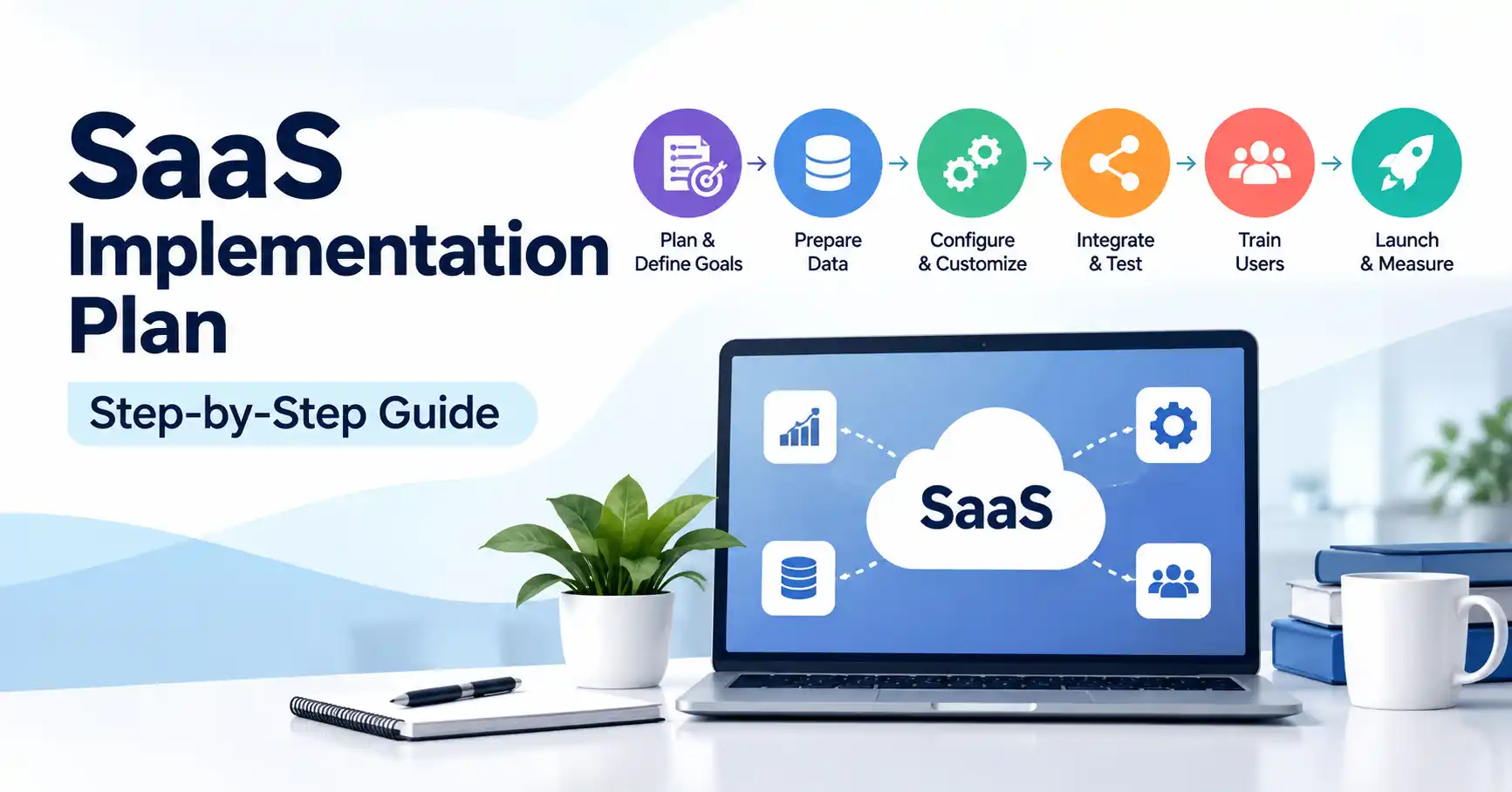
A SaaS implementation blueprint offers your crew a distinct path for rolling out fresh cloud tools. Without this solid scaffolding, firms stumble, Weak adoption. Sloppy migrations, Broken links. Agonizing delays.
Ultimately, a stellar plan ties strategic business objectives, technical configuration, deep system integration, rigorous testing, and training into a single launch.It pins down ownership too, Nobody drops the ball.
This guide covers what goes into a SaaS implementation plan, why you actually need one, and how to build your own from initial mapping all the way to post launch tuning.
Table of Contents
- What is a SaaS Implementation Plan
- Why a SaaS Implementation Plan is Important
- Step by Step Guide
- Best Practices and Tips
- Common Mistakes
- Tools
- FAQs
- Conclusion
What is a SaaS Implementation Plan
Your SaaS implementation plan, it’s the main guide, a roadmap. It maps out getting new cloud software operational inside a company, you’ll address needs, data tidying, system configuration, trials, user education, and monitoring actual adoption.
Picture a business finally ditching spreadsheets for a genuine CRM, What a leap.heir rollout plan maps out sales stages, imports customer files, links up email apps, sets permissions, tests the pipeline, trains the team, and finally goes live.
The point isn’t just turning the software on. You want it actually useful, tied right into how the business runs day to day.
Still figuring out if a tool fits your needs, Your crew might want to check out this guide to SaaS Product Discovery first.
Why a SaaS Implementation Plan is Important
Shipping software in small chunks dodges messy deployment disasters completely.
Key benefits include:
- Adoption accelerates instantly when people realize how the platform genuinely supports their daily grind.
- Data accuracy skyrockets.
- Why, because users meticulously scrub every legacy record before migration even begins.
- Bugs completely evaporate through upfront scenario testing, while accountability naturally sharpens as every vital responsibility finally lands on a single, unmistakable owner.
- ROI looks remarkably sharp when the build targets actual business goals.
Rolling out software is a brutal human test. Brilliant code tanks if teams cannot see why it exists. Does it actually make their daily grind better? That is the real metric.
Step by Step Guide
Step 1: Define Goals and Requirements
Let’s get real. What’s the company actually chasing with this SaaS thing, Forget the tech for a minute. What’s the ultimate win here? What pain point are we truly killing, who’s actually going to use it daily, and how do we even measure success?
When rolling out new helpdesk software, what’s the real goal? Quicker replies? Better ticket tracking? Happier customers? Figure out those core aims first, before you start fiddling with settings, Seriously, knowing what’s essential versus just nice to have is key.
Step 2: Build the Implementation Team and Timeline
Figure out ownership. Right at the start. Assemble your core team: owner, SaaS admin, tech lead, a department rep, and the end users.
Map out a strict timeline. Hit config, data prep, integration, testing, training, launch, and then wrap with a post launch review.
A project management tool makes tracking all this much easier, Take Jira, for example. It handles planning, task ownership, schedules, and tracks progress.
Break the work down. Set up distinct jobs, Configure user roles, map your data, and test the CRM tie in. Then train the sales team, and finally, approve the production launch.
Step 3: Configure the System and Prepare Data
Set up the SaaS platform now, Build out users, custom fields, approval chains, and all core settings.
Data prep happens at the exact same time. Clean your current records for duplicates and broken formats before you import a single item.
Think about migrating fifty thousand customer profiles into a brand new CRM. It is messy work, and it takes real care to pull off cleanly without losing key info.. Don’t just dump the raw files over. Strip out duplicates, clean up messy fields, flag dead accounts, and map the old fields into the new structure properly.
Check out the SaaS Data Migration Guide for more.
Step 4: Set Up Integrations and Test Workflows
SaaS platforms rarely operate in isolation. Instead, they constantly wrestle with external payment rails, CRM setups, analytics engines, chat apps, marketing tools, and stubbornly tangled internal databases.
Map out how data flows across those boundaries. Who owns what piece of the puzzle?
Take a purchase. When money clears, the billing app has to talk to the CRM, spit out an invoice, and kick off onboarding.
Don’t launch blind, Test these chains with real world messiness. Run through clean checkouts, botched payments, blank fields, permission roadblocks, double entries, and flat out API crashes.
Here’s your hands on guide for SaaS integration. Your team? They’ll use this to blueprint their connected workflows.
Step 5: Train Users, Launch, and Measure Results
Prep your crew before launch day arrives with a clear change management strategy . Skip the granular feature lists. Zero in on daily routines people actually touch, and keep every training session short. Mix things up with punchy live walk throughs, printed manuals, quick clips, and simple Q&As. Find eager early adopters right away. These champions end up rescuing their peers once the software runs live.
Run through an exacting checklist prior to flip day. Run integrity checks, lock down permissions, test the lines, verify backups, and keep helpdesk channels wide open. Most importantly? Build an escape hatch, you genuinely need an ironclad rollback plan if things go south on you.
Watch usage closely after you deploy. Track daily users, task completion, support tickets, lag times, error rates, and client sentiment. If people still ignore the tool a month later, find out why. Rollouts don’t really end.
SaaS Implementation Approaches Compared
Complex setups demand careful handling. A phased rollout usually makes sense, Why? You catch bugs early, long before the entire company gets burned by a costly system failure.
| Approach | Best For | Main Advantage | Main Risk |
| Big bang | Small and simple rollouts | Fast organization wide launch | Problems can affect everyone |
| Phased rollout | Large organizations | Lower implementation risk | Takes longer |
| Pilot rollout | Testing with selected users | Real user feedback before launch | Pilot group may not represent everyone |
| Parallel rollout | Critical business systems | Existing system provides backup | Higher cost and effort |
| Hybrid rollout | Complex SaaS environments | Flexible implementation | Requires strong coordination |
Which path wins, it depends entirely. Chaotic markets, brutal outages, and sheer scale require your absolute focus immediately.
Best Practices and Tips
- Lock in those metrics early.
- Maintain a single master file tracking every owner, deadline.
- And lurking risk, while ruthlessly scrubbing all raw data clean prior to launching the migration.
- Do not merely test basic functions.
- Run brutal, real business scenarios through your integrations.
- Involve your team early so daily habits dictate the workflows, Nobody wants generic tutorials.
- Give them role specific training instead.
- Finally, map out strict post launch check ins at thirty, sixty, and ninety days.
Maintain a living implementation risk register. Seriously. Log every potential threat alongside its financial impact, designated owner, and exact mitigation strategy required to neutralize it completely today.
Common Mistakes
Launching Without Clear Goals
Can they actually picture winning, If not, did the rollout work? Honestly, it remains nearly impossible to tell.
Migrating Unnecessary Data
Shifting every record creates total clutter. This turns the platform into a massive headache, unless you first figure out what the business really needs.
Ignoring Integrations
That solo app? It’s perfect. But hook it into billing, CRM, or analytics, then everything just shatters, Absolute chaos.
Training Users Too Late
Training is not just some simple box to check off when things finally calm down. Users genuinely need plenty of time to absorb, test, and master workflows.
Treating Launch Day as the Finish Line
Launch day isn’t the finish line. Teams keep chasing adoption, hunting obscure bugs, smoothing workflows, and nervously watching the bottom line.
Tools
Gear choice depends on your chaos. Jira traps teams in endless tasks, deadlines, and momentum. Then Zapier arrives, completely handling the boring stuff so you can finally breathe. That one works well when you need to hook up SaaS apps without writing custom code for every little connection.
Need something heavier? Make handles knotty visual workflows with branching logic and data shifts. Workato steps in for massive enterprise integration environments. And for data migration, native tools, custom APIs. Or database services all fit the bill depending on your source and target systems.
FAQ’s
How long does SaaS implementation take?
The schedule shifts wildly. It all depends on user counts, raw data volume, custom code, testing depth, and system complexity. That is reality.A simple SaaS setup might take just days, Enterprise rollouts? Those usually drag on for months.
What should a SaaS implementation plan include?
Usually, this involves targets, ownership, requirements, and schedules. Never skip data migration, configurations, integrations, rigorous testing, training, launch prep, support, and success metrics.
Who should manage SaaS implementation?
The project owner steers the ship, true, yet tech, ops, security, and business stakeholders demand completely distinct roles throughout.
Should we migrate all existing data?
Discard the dead weight first. By hauling over solely what matters, daily routines, reports, strict rules. And your old records, you will prevent major headaches down the line.
How do you measure SaaS implementation success?
Watch tech and business both. Track user adoption, finished tasks, glitches. And sudden support surges alongside latency and customer happiness, are those early targets genuinely being hit?
Conclusion
Deploying a SaaS platform demands far more than just passing out login credentials. You need a rigorous blueprint. One that anchors your primary commercial objectives directly to software connections, your messy data, daily routines, and the human beings operating the whole mess. Oh, and tracking metrics matters.
Start by pinning down what leadership genuinely expects to achieve. From that exact benchmark, assign responsibilities, scrub your datasets, configure the architecture, verify system links, prep your staff, and finally hit launch.
Therefore, here’s your subsequent action: construct a single page guide for your upcoming SaaS deployment.Give one person total ownership of each major initiative and enforce a strict deadline, which kills off the endless headaches plaguing wandering SaaS projects. It flat out works.
Seeking further assistance with implementation and integration? Explore Saasyntic’s SaaS resources.