
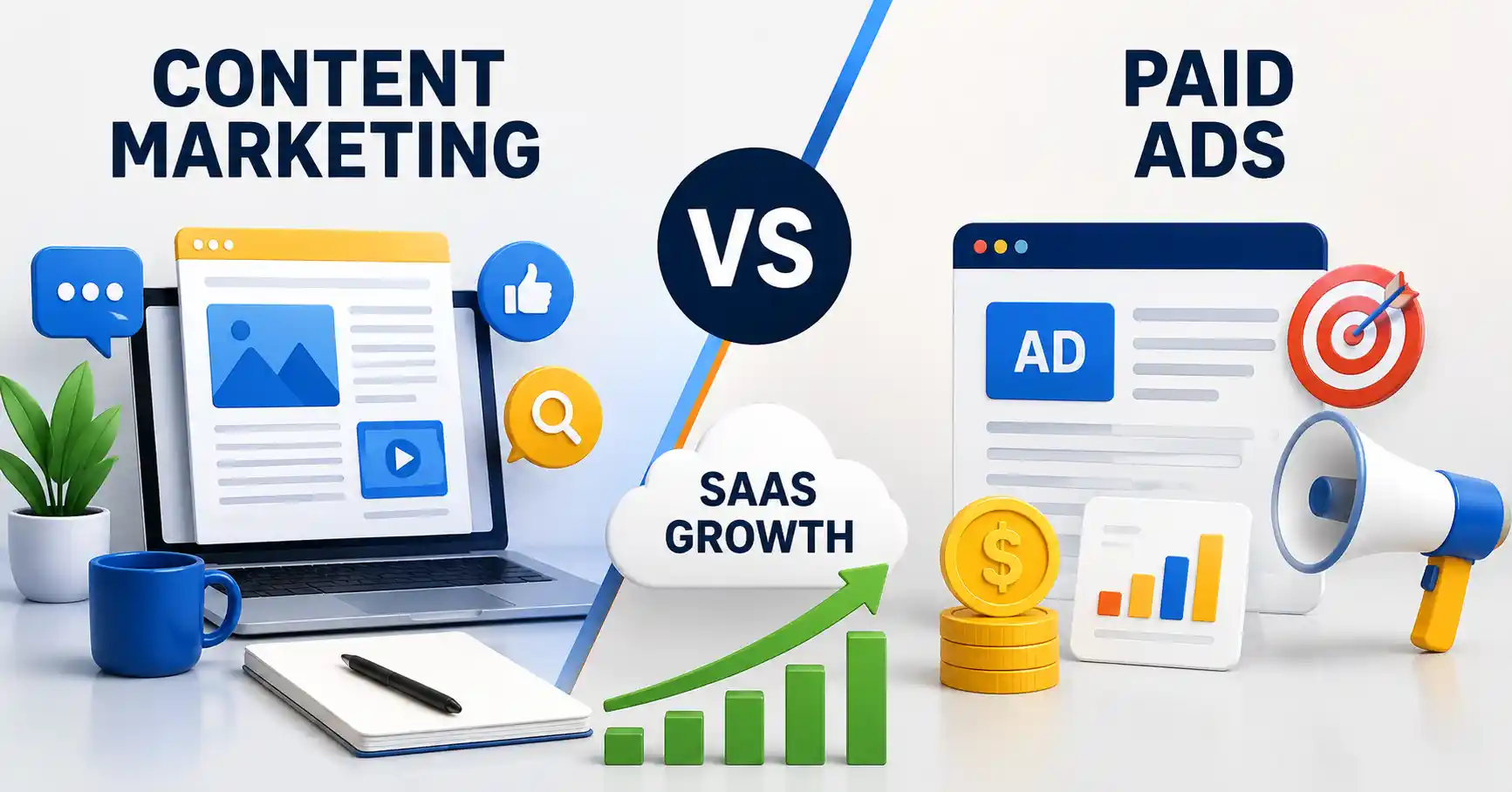
SaaS teams constantly debate content marketing versus paid ads when trying to drive steady leads. Content builds trust and organic visibility slowly. Paid ads, though, pull in targeted traffic fast. The real catch? Figuring out where to drop your cash when budgets run tight and targets loom large. This guide breaks down how both channels operate, exactly when to lean on each one. And how blending them together can supercharge your SaaS growth.
Table of Contents
- What is Content Marketing vs Paid Ads SaaS
- Why Content Marketing vs Paid Ads SaaS is Important
- Content Marketing vs Paid Ads Comparison
- Step by Step Guide
- Best Practices and Tips
- Common Mistakes
- Tools
- FAQs
- Conclusion
What is Content Marketing vs Paid Ads SaaS
Content marketing and paid ads are two distinct ways to rope in SaaS customers.
Content marketing uses helpful stuff. Think blog posts, case studies, video tutorials, comparison pages, and reports to hook people coming off search engines, social media, or referrals. Picture a project management software firm posting a guide on leading remote teams. A buyer digs up the article on Google, picks up some tips, and sooner or later signs up. That is the long game.
Paid ads work differently. Networks like Google Ads, LinkedIn Ads, and Meta Ads put your software pitch right in front of a precise crowd. That same firm could just buy space on Google for folks actively searching for project management tools.
The main split comes down to this. Content builds organic traffic and demand slowly over time, whereas paid ads grab targeted eyeballs right away.
For a deeper look into SaaS marketing basics, check out the resources over at Saasyntic.
Why Content Marketing vs Paid Ads SaaS is Important
- Picking the right acquisition play shifts your customer acquisition cost, lead quality, growth velocity, and long term marketing efficiency. Why does this choice matter so much?
- Content keeps pulling in traffic long after you pay to publish it. Paid ads, though, spin up traffic and leads way faster than organic search ever could. Content builds real trust and shows expertise before anyone from sales even calls. Paid campaigns let you lock onto exact audiences, specific industries, and precise search intent.
- Blend both, and you get a balanced SaaS acquisition engine.
- Lean only on paid traffic, and climbing ad costs will slowly grind you down. Rely purely on SEO, and you will wait months just to see a single pulse of momentum. Smart founders use both to lower the risk.
Content Marketing vs Paid Ads Comparison
The right choice depends on your growth stage, budget, sales cycle, and customer acquisition goals.
| Factor | Content Marketing | Paid Ads | Best Use |
| Speed | Slower to build | Fast | Paid ads for immediate demand |
| Cost model | Mainly production and distribution costs | Pay per click or impression | Depends on budget |
| Long term value | High | Lower without ongoing spend | Content marketing |
| Targeting | Based on topics and search intent | Highly targeted | Paid ads |
| Trust building | Strong | Moderate | Content marketing |
| Testing offers | Moderate speed | Very fast | Paid ads |
| Scalability | Gradual | Fast with budget | Paid ads |
The strongest SaaS strategy usually combines content for long term growth with paid ads for speed, testing, and demand capture.
Step by Step Guide
Step 1: Define Your Growth Goal
Start by getting brutally honest about your actual needs right now. Do you need pipeline today? If pulling in qualified leads over the next few weeks is the ultimate goal, paid ads usually get you there faster. But build a sustainable acquisition channel that pays dividends next year? Content marketing demands your absolute attention, and then some, Take a new software product gearing up for a hard sales push. They might lean on paid search to grab immediate traction while quietly publishing targeted search engine optimization articles in the background.
Step 2: Understand Your Customer Intent
Dive deep into what potential buyers are typing into search bars right before they finally open their wallets. High intent searches like best CRM for startups, accounting software for SaaS companies. Or direct alternatives to a specific competitor are absolute goldmines for both SEO and paid search. Meanwhile, lower intent inquiries like how to improve customer retention belong in educational blog posts or guides. You need to map these distinct topics across the classic awareness, consideration, and decision stages of the buyer journey.
Step 3: Build Content Around High Value Topics
Never publish content just because some random tool says search volume is high, Focus instead on topics connecting directly to your product features and real customer headaches. Take an email marketing SaaS. It could put out comprehensive automation guides, deep strategy pieces, direct competitor face offs, client case studies, campaign templates, and hyper specific product tutorials. Why? To reel in the exact right crowd and nudge them gently toward buying. That is the whole point. You can also review the guidance provided by Google Search Central when developing search focused content.
Step 4: Use Paid Ads to Capture and Test Demand
Paid advertising really shines once you know which audiences and offers will actually convert. Do not scatter a modest budget across a dozen different channels. Start tight instead. A software startup might test search engine ads for high intent keywords while simultaneously running platform campaigns targeting very specific job titles. It works. Paid campaigns are also phenomenal for testing landing page headlines, pricing messages. And customer segments much faster than simply waiting around for organic growth to finally kick in.
Step 5: Measure Both Channels Together
Forget vanity traffic stats. Instead, monitor the actual metrics that truly matter. Watch qualified leads roll in, count trial signups, demo requests, and conversion rates, while keeping a relentless eye on acquisition costs, pipeline growth, and customer lifetime value.
Think about it. Paid ads might drag in a hundred expensive leads, whereas organic content yields forty cheap ones. That smaller organic channel usually wins, it turns out to be far more valuable over the long haul.
Best Practices and Tips
- Match the channel to customer intent. Use paid ads for high intent opportunities and content for education, discovery, and trust building.
- Repurpose successful content. Turn a strong blog post into social posts, email campaigns, videos, and ad creatives.
- Use paid ads to test content ideas. If an ad attracts strong engagement around a particular problem, consider creating detailed organic content around that topic.
- Build dedicated landing pages. Sending every paid visitor to your homepage can make campaigns less effective.
- Track revenue, not just clicks. A cheap click is worthless if it never becomes a customer.
- Refresh high performing content. Updating old articles can be more efficient than constantly creating new ones.
- Retarget engaged visitors. Use paid campaigns to reach people who previously visited important pages but did not convert.
Common Mistakes
Relying Only on Paid Ads
Paid advertising can deliver fast results, but stopping campaigns usually stops the traffic. SaaS companies should build owned acquisition channels alongside paid campaigns.
Expecting SEO Results Immediately
Content marketing often takes time. Publishing a few articles and expecting significant organic traffic within weeks can lead to poor decisions.
Targeting Broad Keywords
Broad keywords can generate traffic without generating qualified customers. Focus on problems and searches closely connected to your product.
Ignoring Conversion Rates
More traffic alone solves nothing. You must map the entire user journey, tracking keywords diligently until cash changes hands.
Using the Same Message Everywhere
A person hunting for a fix expects vastly different things than a casual scroller. That reality matters. You must ruthlessly shape your message to fit the channel.
Tools
Google Search Console
Google Search Console accurately logs every single organic ranking, click, impression, and specific user query.
Google Ads
Google Ads lets you test high intent keywords, offers, landing pages, and acquisition campaigns quickly.
Ahrefs
Ahrefs handles keywords, monitors rivals, checks backlinks, and unearths content gaps instantly.
HubSpot
HubSpot wrangles content, leads, emails, and customer journeys into a single, tidy platform.
Google Analytics
Google Analytics exposes user habits across channels, tracks incoming traffic sources, and meticulously monitors conversions.
FAQ’s
Is content marketing better than paid ads for SaaS?
Neither one is always the winner. Content marketing works wonders for organic growth and building long term trust. Paid ads, though? They win when you need instant traffic, quick testing, and immediate demand.
How long does SaaS content marketing take to work?
It depends. Site authority, writing quality, and search demand all matter deeply. Organic traffic crawls in slowly, Do not just wait. Watch early metrics instead, meticulously tracking conversions along the winding path ahead because that is the only way you actually win.
Are paid ads worth it for SaaS companies?
They can be, absolutely, provided your target audience, offer, landing page, and unit economics actually line up. High intent searches and controlled acquisition experiments are where they truly shine.
Should a SaaS company use content marketing and paid ads together?
Yes, Mixing them creates a real powerhouse. Content builds organic demand and trust. Meanwhile, paid campaigns pull in immediate traffic and let you test your messaging on the fly.
What should a small SaaS company start with?
Start with whatever matches your immediate business goals. Need quick customer acquisition and already have a validated offer? Test paid ads, Low budget with the ability to invest consistently in useful material? Build out an SEO and content foundation instead.
Conclusion
Choosing between content marketing and paid ads for SaaS growth is never about picking a permanent side. It is about knowing what each does best. Give them the right job.
Content marketing quietly builds a lasting source of organic traffic, deep industry authority, and hard earned customer trust. Paid advertising brings raw speed. Laser targeting, too, and exceptionally fast feedback loops when you need to test a new angle yesterday.
For most growing software companies, blending both approaches makes the absolute most sense. Build helpful content around real customer problems, run targeted campaigns to capture immediate intent, and iterate constantly. Measure your true progress using qualified leads, acquisition costs, and actual revenue.
Examine your funnel right now. What is your biggest bottleneck? That single answer dictates your next move.