


Main Points:
• Focus on high-intent, niche keywords to capture qualified leads and drive conversions.
• Incorporate competitor analysis to find keyword gaps and unturned opportunities.
• Focus on end-user intent solve the specific problems for the customer and write content directed towards .
To survive the passive-aggressive galestormy universe because the SaaS (Software as a Service) is keyword analysis, which is not just about much higher Google ranking, but really about reaching the correct audience at the correct moment. In the context of any SEO strategy, the importance of keyword research must be well acknowledged. But in SaaS companies, the stakes are high. This isn’t about findings of traffic; it’s about converting interception traffic into paying customers. So in a world of much noise, which keywords should be those that really give meaning to your business?
In this article, we’ll take a look at advanced SaaS keyword research strategies that go way beyond the basics. We’ll dive further into how you can fine-tune your approach and draw in the audience that makes sense for you, thereby boosting your ranking and, from there, qualified leads.
What Makes SaaS Keyword Research Different?
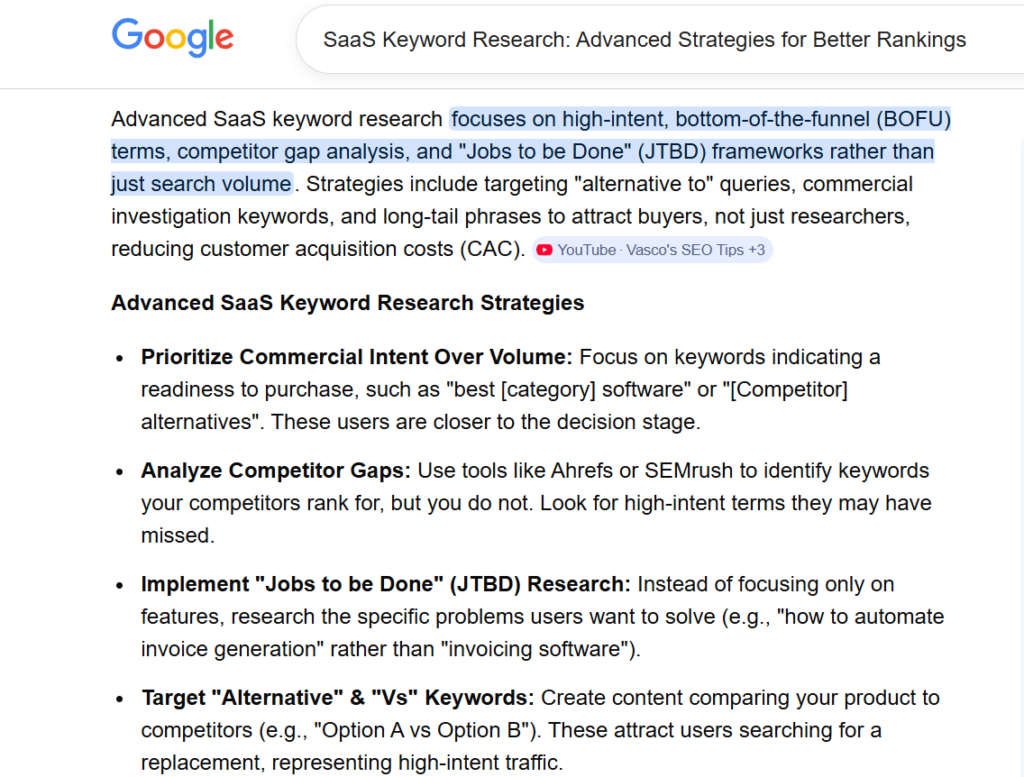
Keyword research makes the core of any effective SEO strategy. However, SaaS businesses have a hint of complexity compared to others. SEO strategies typically focus on terms that are broad and pull in many visitors. On the flip side, SaaS businesses need an entirely different angle that goes straight to the real pain points and offers help with the issues that your perfect customer is already struggling with.
Why bother with this SaaS-specific keyword research angle?
Most likely, these potential customers are still researching once they google solutions. They’re not just trying to buy a product more than anything, they are seeking to buy a solution to their issue. And that means it’s long-term keywords and niche queries that put forward buyer intent.
For instance, if you were working in CRM software, you would not want your keywords to be CRM software only. It would be better to use phrases like best CRM for small businesses or CRM software for sales teams. This way, the term signifies that the searcher is actively considering solutions that fulfill their criteria.
Key Takeaway: SaaS keyword research is not about driving traffic alone it’s about bringing in users who are looking for the kind of solutions the client is ready to provide and who are ready to commit to it.
Steps to Uncover the Right Keywords for Your SaaS
Considering appropriate keywords means even thinking about building up the right strategy. How do you go about finding them? Here’s the breakdown:
Beginning with Central Topics and Themes
Stay away from random keyword focus and start with core issues that are central to your SaaS offering. These could include such things as project management in the project management space.
- Project management tools
- Team collaboration software
- Task management solutions
Big topics can act as a foundational strategy for your keywords’ development, so the topic pool may take the form of deeper content optimizable with long but good keywords.
Keep Your Eyes on the Competition
Search through and find the keywords for which your competitors are ranking. Tools like SEMrush, Ahrefs, or Spyfu can prove most useful. Possibly, you might have the chance to find keyword gaps the topics your business competitors have skipped yet are a good idea for you to keep dominant.
Use Your Clients’ Talk
When customers talk or read reviews, you need to pay careful attention to the exact phrases they use. It is a treasure chest to discover keywords that represent the real intent of the user. Information like this is often revealed by tools such as AnswerThePublic and the “People also ask” feature from Google.
Keyword Mapping
Not all keywords are equal. Some are informational, some are navigational, and others are transactional. By mapping keywords to the user intent at the funnel stage, you can create content that will lead the prospective customer on their journey.
Case Study Example:
Here is a real-world example. An invoicing software SaaS company found that they ranked well for the broad term “invoice software,” but conversion rates were expected. In investigating user intent, ads started to target requests such as “invoice software for freelancers” and “best invoicing software for small businesses.” After that, conversion increased by around 30%.
How is it possible to prioritize keywords for SaaS SEO?
It may not be possible to target each and every keyword for a website. To generate successful placements and conversions, it needs to target and build high-impact keywords that support business goals.
- Keyword Difficulty vs. Search Volume
Inbetween the keyword difficulty and search volume lie the confoundations for the use or not use of a keyword. The practical nature of search may differ greatly among the most popular keywords in a Google keyword search, such as giving low density of omission because of higher search volume. As has been found, keywords for which you would be easily optimizing include the term CRM compared to CRM software because the latter is used only for general purposes in business, and CRM could contain many entities like real estate and insurance. Low search volume and medium to highly competitive keywords should be used judiciously and will be long-term rewarded differenctly.
With search intent in mind=nodejąeczy.
Ensure that your keyword matches search intent. Generally speaking, keywords with commercial intent (e.g., “buy CRM software for small business”) convert better than informational keywords (e.g., “what is CRM software?”). You should prioritize the keywords that belong to the stage in the buyer path before near purchase.
- Be Aware of Trends and Season
Some SaaS products may witness increased demand during certain seasons. Use Google Trends to monitor seasonality so that you may adjust your SaaS marketing strategy in response.
Which Tools Should be Used for SaaS Keyword Research?
There are several keyword research tools on the market, but quality varies depending on which one the brand ultimately finds for its use. In the case of SaaS businesses; it is crucial to extract really granular insights from these tools, so you can go ahead and take some action. Here is a quick comparison of the major tools:
| Tool Spotlight | Pros | Cons |
|---|---|---|
| SEMrush | Extensive competitive research | Based on public domain and social metrics Extensive competitor analysis, Keyword gap analysis |
| Ahrefs | Backlink and keyword gap Analysis | Great for monitoring backlinks and rank keywords |
| Moz Pro | Keyword tracking and on-page optimization | Strong community and educational content |
| Ubersuggest | Budget-friendly keyword research | Affordable, easy to use for beginners |
Key Insight: Whenever browsing for a keyword tool, look for competitors’ around granular keyword analysis. IDEALLY, depending on the budget and complications in marketing for an established business, SEMrush and Ahrefs are the strongest choices in SaaS, while startups would find a great ally in UberSuggest.
How Do You Gauge Your SaaS Keyword Strategy’s Success?
How do you assess the ongoing value for the high-PR content?
Monitor Organic Traffic and Rankings
Tools like Google Analytics and Google Search Console are useful in giving you an idea of organic traffic and rankings. Following those search positions for the targeted or example keywords will show you, in time, whether you really are getting better.
- With conversions, you could know the worth rather than just traffic.
- Only an engagement measure could affect a bounce rate.
Leading visitors from their search to a landing page that drops them from the page provides cues about discrepancies between users’ searching and the page’s content. All major engagement metrics indicate achieving great success with the keyword strategy.
Conclusion: why should your SaaS keyword strategy evolve?
Considering the intensifying tide of SaaS competitions, bringing on an accelerating pace of business operations, businesses would have to keep improving activities related to keyword research. To be ever-leading, continuing to watch after the trend, revise focus based on evolving user intent, and adapt, tailor, and fine-tune strategies are vital to company growth.
Low-case-long-lasting-success in the SaaS setup will require one to aim at high intent keywords. This means targeting niche keywords, measuring performance, and using the best tools. Keyword research is not just about high-ranking but also about identifying what your customers need and giving them niche content for going in for the decision to purchase..