
There’s a good chance that the hole in the majority of SaaS leaks up to 60–80% of expected revenue not because the products are bad, but because people are battening down the hatches for acquisition without bothering about what’s happening at the conversion end of the funnel.
Key Takeaway
- A strong saas sales funnel is less about traffic and more about progression between stages
- Conversion bottlenecks usually sit in onboarding, not awareness
- The best SaaS companies design funnels around user behavior, not marketing stages
What is a SaaS Sales Funnel and why does it matter?
Short answer: A saas sales funnel is the structured journey that turns a stranger into a paying, retained customer.
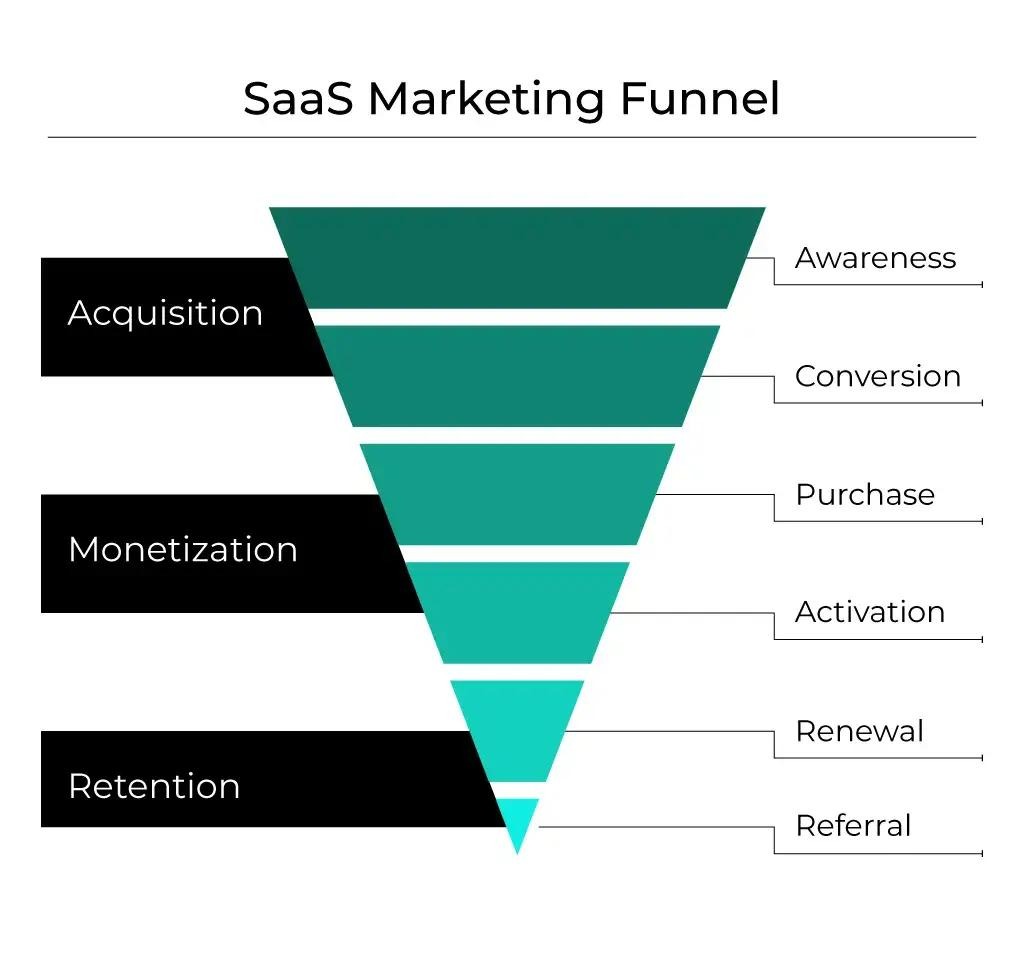
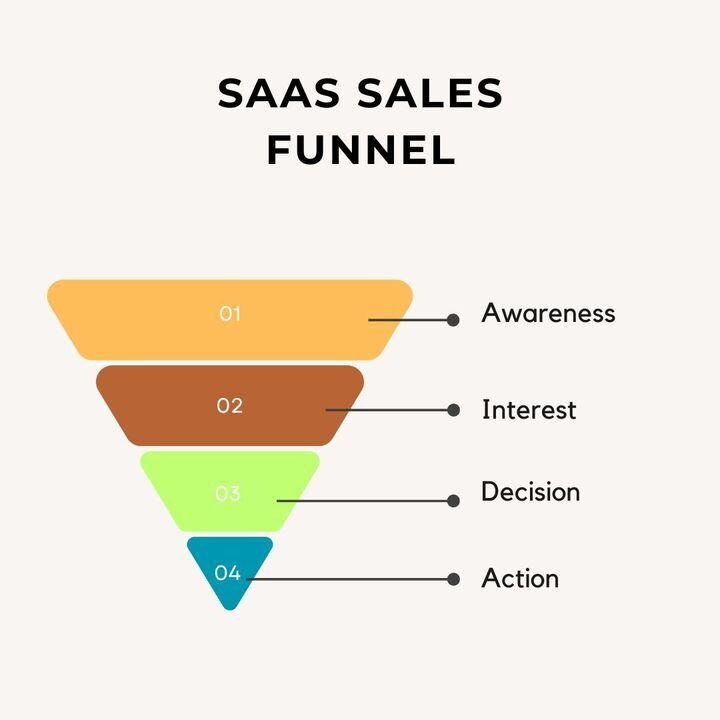
Most people think of funnels as linear. Awareness → Interest → Decision → Purchase. That works in theory, but SaaS doesn’t behave that way.
In SaaS, your funnel is cyclical. Users evaluate continuously, even after purchase. Churn is always one bad experience away.
Here’s what actually happens:
- A user discovers your product
- Signs up for a free trial or demo
- Hits friction during onboarding
- Either activates or drops off
- If activated, decides whether it’s worth paying
- Then continuously evaluates value every billing cycle
The key shift: your funnel doesn’t end at conversion. It extends into retention and expansion.
Summary: A SaaS funnel is not a path to purchase. It’s a system for sustained value delivery.
What are the stages of a SaaS sales funnel?
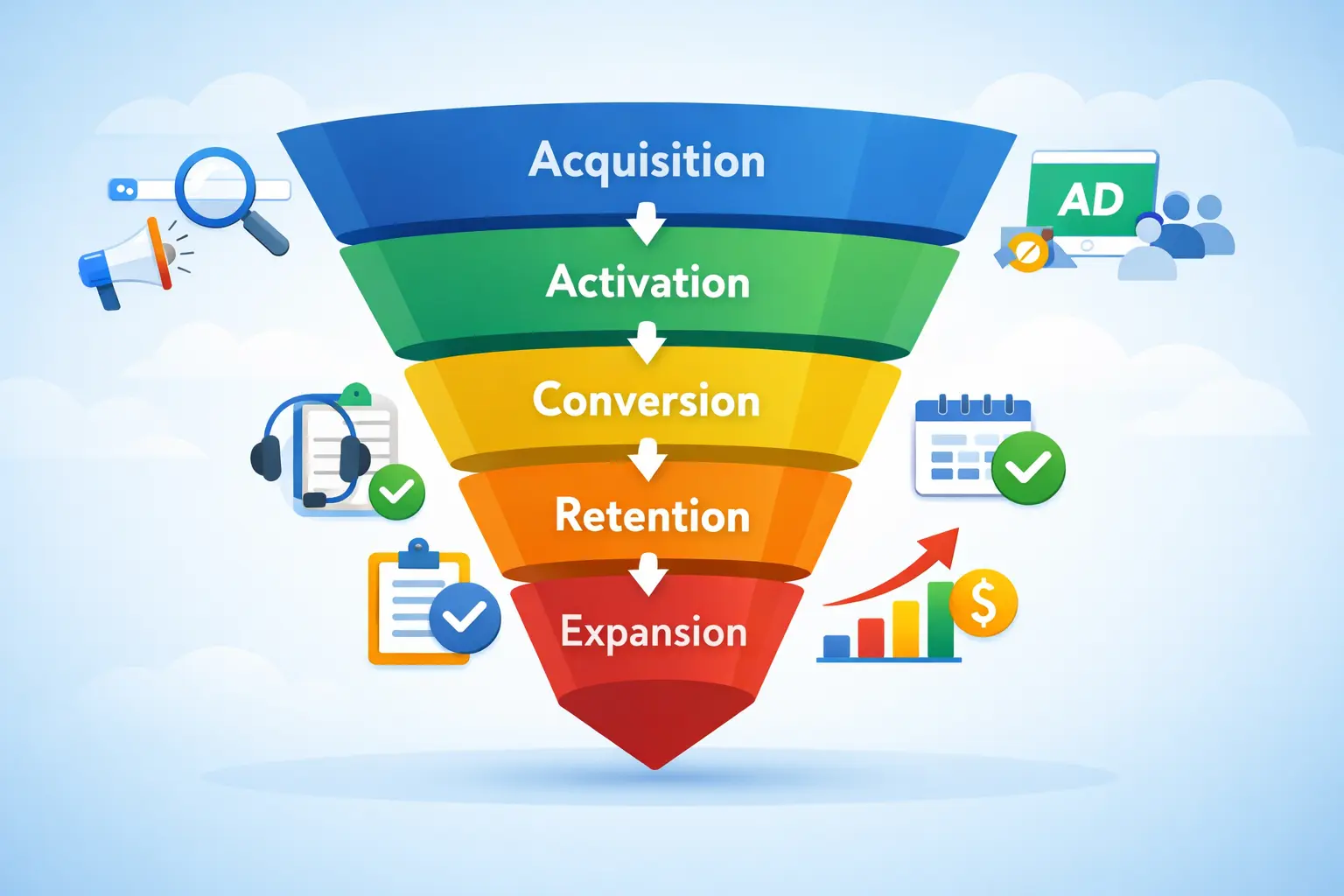
Short answer: The core stages are Acquisition, Activation, Conversion, Retention, and Expansion.
Most SaaS founders over-focus on acquisition. But growth happens when all five stages are aligned.
1. Acquisition
This is where users first hear about you. Channels include saas seo, paid ads, referrals, and content.
If you’re working on a solid b2b saas marketing strategy, acquisition is where positioning matters most.
2. Activation
Activation happens when a user experiences your product’s core value for the first time.
Example: Slack’s activation moment is sending the first team message.
3. Conversion
This is when users upgrade to paid.
4. Retention
Users stay only if your product keeps delivering value.
5. Expansion
Upsell, cross-sell, add-on.
Summary: Growth comes from optimization in transitions between stages, not from increasing truck.
How does a SaaS sales funnel actually work in practice?
Short answer: It works by reducing friction at each stage and increasing user intent step by step.
Case Study: Notion’s Funnel
Notion uses a product-led approach instead of aggressive sales tactics.
Step-by-step:
- Discovery through templates and content
- Frictionless signup
- Activation via ready-made templates
- Habit formation through daily use
- Conversion when collaboration is needed
- Expansion across teams
The insight is simple: Notion removes cognitive load early and shows value immediately.
Summary: The best funnels don’t push users forward. They pull them in through experience.
Where do most SaaS funnels break?
Short answer: Most funnels fail at activation and onboarding, not acquisition.
SaaS Funnel Bottlenecks Comparison
| Stage | Common Mistake | Real Problem | Fix Strategy |
| Acquisition | Low traffic | Wrong audience targeting | Improve positioning |
| Activation | Low trial usage | Poor onboarding | Simplify first-use experience |
| Conversion | Low upgrades | Weak perceived value | Show ROI early |
| Retention | High churn | Inconsistent value | Improve product stickiness |
| Expansion | No upsells | No upgrade path | Add contextual triggers |
Takeaway: Pricing changes are often regarded as the universal conversion booster in SaaS. The issue, however, is actually much more upstream in the funnel.
How can you optimize your SaaS sales funnel step by step?
Short answer: Identify friction points and fix them stage by stage.
Step-by-step framework:
- Map your funnel metrics
- Define your activation event
- Reduce time to value
- Add behavioral nudges
- Improve conversion triggers
- Build retention loops
For a deeper breakdown of retention strategies, read this guide on SaaS customer retention strategies.
Summary: Funnel optimization is continuous iteration based on user behavior.
What most SaaS advice gets wrong about funnels
Short answer: It treats funnels as marketing systems instead of product systems.
Most advice focuses on traffic and ads. But in SaaS, your product experience is the funnel.
If onboarding is weak, conversion drops.
If retention is poor, growth collapses.
This is why product-led growth is dominating.
A good example is HubSpot’s approach. They built growth through education and free tools. You can explore it here: HubSpot’s SaaS sales funnel breakdown.
Summary: The strongest SaaS funnels are built inside the product.
This type of dashboard helps you:
- Spot drop-offs instantly
- Compare cohorts
- Track improvements after experiments
Final Thoughts
A high-performing saas sales funnel is not about pushing more users into the top. It’s about helping the right users move forward naturally.
Small businesses often think they need bigger budgets. In reality, they need better funnel design.
If you fix activation and retention, your acquisition costs drop automatically.
If you align product and marketing, your funnel becomes a growth engine.
For a deeper look at aligning marketing with funnel stages, check this guide on b2b saas marketing strategy.
Final summary: The best SaaS companies don’t just build funnels. They build experiences that convert.