

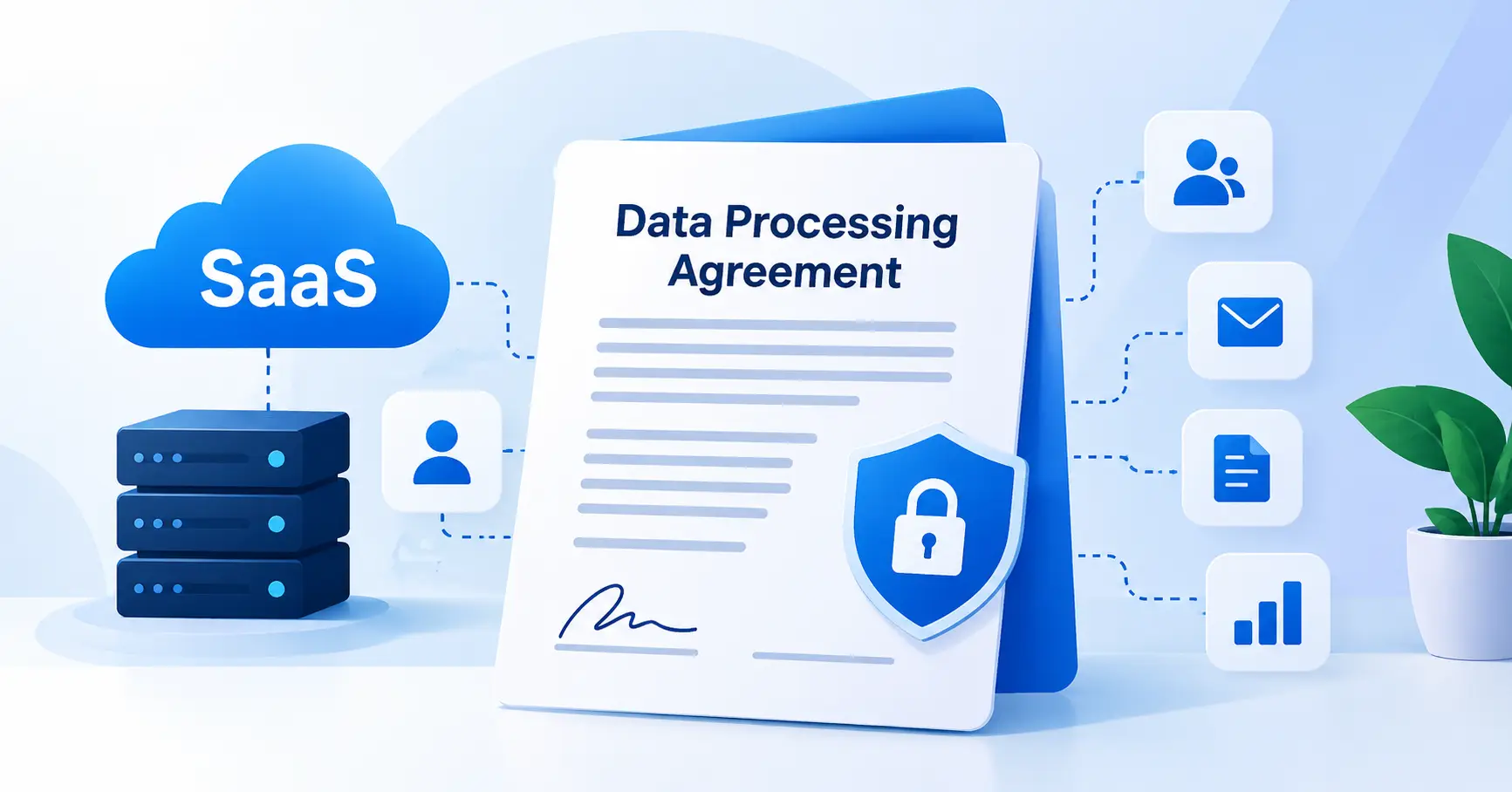
A SaaS data processing agreement is a contract spelling out how a SaaS business manages personal data for a customer. This document kicks in whenever a provider handles stuff like names, email addresses, staff records, or other sensitive details. Without it, both sides stumble blindly through privacy duties. Why take the risk? This guide breaks down what a DPA actually covers, why companies genuinely need them, how to write one, and which specific clauses demand a very careful second look.
Table of Contents
- What is SaaS Data Processing Agreement
- Why SaaS Data Processing Agreement is Important
- Step by Step Guide
- Best Practices and Tips
- Common Mistakes
- SaaS Data Processing Agreement Tools
- SaaS Data Processing Agreement Comparison
- FAQs
- Conclusion
What is SaaS Data Processing Agreement
A SaaS data processing agreement functions as a binding contract between a data controller and a processor. It outlines what personal information the vendor handles, the exact reasons for touching it, required security safeguards, and the protocol when the relationship ends.
Consider a firm running a customer support platform. That business controls its users’ personal data. Meanwhile, the SaaS vendor merely stores and processes that same information to run the helpdesk tools. The DPA maps out who does what. It is essential.
GDPR Article 28 demands that any processor operation must rely on a formal legal instrument. This document has to spell out several things, including duration, subject matter, the nature and purpose of the processing, types of personal data. And categories of data subjects. No exceptions.
Exact legal demands shift constantly. It all depends on local statutes and the specific processing work a business actually performs day to day.A DPA should therefore be reviewed alongside the applicable privacy requirements rather than treated as a universal template.
For a broader understanding of the topic, see our guide to SaaS Data Privacy.
Why SaaS Data Processing Agreement is Important
A well structured DPA gives both the SaaS provider and customer a clearer understanding of their data protection responsibilities.
It can help SaaS companies:
- Define exactly what customer data can be processed
- Document security and confidentiality responsibilities
- Explain how subprocessors can be used
- Establish procedures for data breaches and privacy requests
- Clarify what happens to customer data after the service ends
When selling software upmarket, a data processing agreement suddenly becomes a massive hurdle during security sign offs. Enterprise buyers always ask the hard questions, Where does the data actually live? They demand to know every single third party with access and how privacy rules get handled.
The European Data Protection Board remains absolute on this point. Contracts must comprehensively cover confidentiality, security measures, subprocessors, assistance with user rights, breach response protocols, data deletion schedules, and audits. No exceptions.
Step by Step Guide
Step 1: Identify the Data Being Processed
Start by cataloging what personal data your SaaS product touches. Names, phone numbers, staff rosters, help desk chats, IP addresses, and billing profiles all count.
Avoid dumping vague terms into the agreement. Get specific. Describe the actual engine grinding behind the scenes.
Think about a project management tool. It digests real staff names, corporate emails, project comments, uploaded documents, and daily user activity logs.
Step 2: Define the Processing Purpose
Your DPA must spell out exactly why that SaaS vendor touches your data. Sure, they might handle records purely to host the platform, run routine backups, or squash support tickets. But bind those functions directly to the actual service. Period. Never hand them a blank check to harvest your corporate information for random side projects.
Step 3: Document Security and Confidentiality Controls
How does the SaaS firm actually safeguard your personal info? Look to the agreement. It usually spells out technical and organizational defenses. Think encryption, tight access controls, authentication checks, staff confidentiality rules, regular backups, constant monitoring, and incident response plans.
Crucially, your real world SaaS security must back up every single promise made in the DPA. If that contract vows that only approved staff touch customer data, the company better enforce actual access limits and review habits to prove it.
Step 4: Review Subprocessors and Data Transfers
Most SaaS companies lean heavily on outside providers. Cloud hosting, email delivery, analytics, payment services, monitoring, and customer support platforms routinely process information.
These vendors morph into subprocessors the second they handle personal data for the SaaS firm. Your DPA better spell out how those subprocessors get authorized, notified, and managed. Full stop.
Under the GDPR, a processor generally needs the controller’s prior written permission before hiring another vendor, though general authorizations work if you follow the strict rules about notifying the controller whenever things change.
Cross border data flows demand careful handling. Contracts must tackle transfer mechanisms and legal requirements head on.
Step 5: Define What Happens During and After the Contract
You also need to document what happens when things go sideways or someone walks away. Crucial stuff. The DPA must spell out breach help, privacy requests, audits, and exactly how data gets returned, deleted, or held. Say a client abruptly shuts down their SaaS account. The contract has to state what happens to their information. Does it get wiped instantly, shipped back, or stored a bit longer for legal reasons?
Best Practices and Tips
- Right, make sure that DPA actually mirrors your tech stack and infrastructure, okay, Get those subprocessors tallied up correctly, then just double check the whole roster regularly.
- Be specific about the personal data you’re actually dealing with.
- Document your security, but for crying out loud, only promise what’s truly feasible.
- Detail that breach notification plan.
- Establish solid protocols for returning or erasing client data.
- Oh, and update that DPA the moment a new service, data stream, or subprocessor enters the picture.
Never treat a DPA as a dusty legal relic you draft once and forget. Products morph, vendors swap out, infrastructure shifts underneath, and those messy data flows mutate. This agreement demands your ongoing attention.
Common Mistakes
1. Using a Generic DPA Without Checking the Product
A template may contain useful clauses, but it may not accurately describe your SaaS architecture or processing activities.
2. Forgetting Subprocessors
A SaaS company may mention its main platform while overlooking cloud hosting, analytics, communication, or support providers that also handle customer information.
3. Making Vague Security Promises
Statements such as strong security controls are difficult to evaluate. It is better to describe relevant technical and organisational measures clearly.
4. Ignoring Data Deletion
Customer data should not simply remain indefinitely after an account ends. Define retention and deletion procedures that match the contract and applicable requirements.
5. Treating the DPA as Separate From Operations
If the DPA promises controls that engineering and security teams do not actually operate, the document creates a gap between contractual commitments and reality.
SaaS Data Processing Agreement Tools
SaaS companies can use several types of tools to manage DPA related work.
- Contract management platforms can organize agreements, renewals, approvals, and versions.
- Privacy management platforms can help track processing activities and privacy workflows.
- Vendor management platforms can maintain information about subprocessors and third party providers.
- Compliance platforms can connect privacy controls with policies, evidence, and audits.
- Document management systems can keep signed agreements and supporting records organized.
The right choice depends on company size and complexity. A small SaaS business may start with a structured contract repository and spreadsheet based vendor register, while a larger company may need dedicated privacy and compliance software.
SaaS Data Processing Agreement Comparison
| Agreement or document | Main purpose | Typical use |
| DPA | Defines personal data processing responsibilities | SaaS provider and customer |
| Privacy Policy | Explains how an organization handles personal data | Website and product users |
| Terms of Service | Defines the general rules for using the service | SaaS provider and customer |
| Security Addendum | Documents security requirements and controls | Enterprise SaaS contracts |
| Standard Contractual Clauses | Provides a legal mechanism for certain international data transfers | Cross border data transfers |
The key difference is that a DPA focuses specifically on the relationship and responsibilities involved in processing personal data.
For companies working with European personal data, the European Data Protection Board provides useful guidance on controller and processor relationships
FAQ’s
Is a DPA required for every SaaS company?
That depends. Is a DPA actually required? It all hangs on local privacy laws, who’s doing what, and whether personal data is getting processed for someone else.
Who signs a SaaS data processing agreement?
Typically, the customer acting as the controller and the SaaS provider acting as the processor enter into the agreement. The exact relationship should be determined from the actual processing activities.
What should a SaaS DPA include?
It commonly covers processing purposes, data categories, confidentiality, security measures, subprocessors, privacy rights assistance, breach support, audits, international transfers, and data deletion or return.
Can a DPA be part of the SaaS contract?
Sure. A DPA can stand alone as its own document, tag along as an attachment. Or slide right into the main SaaS agreement. It just depends how you structure things.
Does a DPA guarantee GDPR compliance?
Sure, a DPA handles contract terms, yet it never single handedly guarantees a SaaS vendor is truly compliant. Enterprises still demand rigorous internal policies, operational workflows, and strict security controls humming along constantly.
Conclusion
A SaaS data processing agreement sets up solid ground rules between software companies and clients regarding personal data. It spells out exact responsibilities, strict limits, subprocessor rules, and the exact protocol when a security mess unfolds.
What is the next move? Map out every scrap of personal data your product touches. Track down each subprocessor, write down your security defenses, and double check that your current agreement matches how you operate. If you are building a wider compliance programme, our SaaS Compliance Guide is a useful next step. A qualified privacy professional or lawyer should review the final agreement for your specific jurisdictions and processing activities.